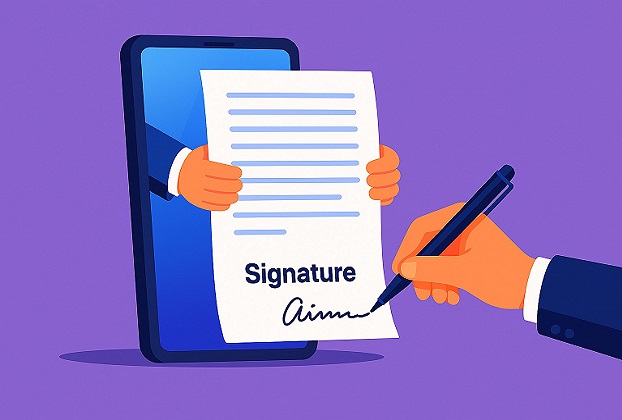
In the fast-paced world of online commerce, much of the legal glue—contracts, affidavits, power of attorney, identity verifications—still demands a formal, trusted signature process. That’s where mobile notaries and remote online notarization (RON) services become critical enablers. What was once considered niche or peripheral is becoming a core component of trust infrastructure in digital transactions.
Let’s walk through how mobile notary models integrate into e-commerce, what happens behind the scenes, and what risks and protections exist when human involvement is minimized or bypassed.
Why E-Commerce Needs Notarization
At first glance, typical retail e-commerce (say, buying shoes or electronics) might not need a notary. But as e-commerce platforms evolve, they increasingly host more complex, high-stakes transactions. Examples where notarization becomes relevant:
Large B2B or B2C contracts: Long-term supply agreements, service contracts, licensing deals.
Loan/Financing arranged through e-commerce platforms: For instance, “buy now pay later” or installment financing where legal documents are involved.
Real estate, title, or property-related marketplaces: Platforms facilitating property rentals, fractional ownership, deed transfers or leases.
Cross-border contracts: Where signature verification across jurisdictions is essential.
Identity verification / KYC (Know Your Customer) augmentation: When a platform wants extra legal certainty over a user’s claim.
In these scenarios, having a notarized document increases legal enforceability, deters repudiation, and reassures parties that the document was properly witnessed.
Thus, services like mobile notaries (who travel to the signer) or remote online notarization (RON) are increasingly integrated as value-added features in e-commerce stacks, especially in developed markets.
Two Flavors: Mobile Notary vs Remote Online Notarization (RON)
Mobile Notary
A notary public physically travels to the user’s location (home, office, cafe, hospital). The signer is physically present, shows ID, signs documents, and the notary stamps/seals in person. This scenario is common for high-priority in-person needs (e.g. hospitals, elderly clients, remote areas)
Remote / Online Notarization (RON)
The notary and signer interact over a video link. Documents are in digital form or scanned. The notary verifies identity via electronic means, witnesses the signing in real time, then affixes an electronic seal.
This is often fully remote scenario, no human courier involved.
Over time, RON is becoming the prevalent model in many developed jurisdictions, because it scales better and doesn’t require physical travel. Many states in the U.S. have adopted permanent RON legislation, and service providers are integrating API-based notarization into fintech, legal tech, and insurance platforms.
How It Works (RON): Step-by-Step (Technical + Procedural Flow)
Below is a generalized, idealized sequence for how a remote (or hybrid mobile + remote) notary process might be integrated into an e-commerce (or legal transaction) workflow:
Step 1: Transaction Setup & Document Preparation
The e-commerce platform (or relevant app) generates the document(s) needing notarization (e.g. contract, affidavit). The document is uploaded (or digitally composed) into the system’s document store (often in PDF or specialized format). The platform marks the fields requiring signature, date, initials, etc.
Step 2: Notarization Request & Scheduling
The user/customer triggers a “Notarize Now” flow. The system checks jurisdiction compatibility (i.e. is RON legal in the required state/jurisdiction?). If remote is allowed, the user is offered a video-notary slot. If not, the user may opt for a mobile notary visit (in-person). The system may ask for scheduling preferences (immediate, same day, specified time window).
Step 3: Identity Verification
The signer is prompted to upload or capture a government-issued ID (passport, driver’s license, social security card or national identity card). The platform employs identity-proofing techniques (often called KBA: Knowledge-Based Authentication).
- The user may answer challenge questions (e.g. about their credit history, public record)
- Facial recognition / biometric matching: The system compares a live selfie or video snapshot to the ID’s photo
- Liveness detection: to ensure the video feed is of a real, live person (to prevent photos, deepfakes, or replays)
Some advanced systems cross-check with external identity databases or credit bureaus.
Step 4: Live Video Session & Signing
- The notary joins a live video session with the signer
- The notary checks that the signer’s identity matches the verified identity and that the ID is still valid
- The document is displayed (via screen share or secure viewer)
- The signer (in the video) signs digitally in front of the notary (e.g. via drawing signature, click-to-sign, or filling fields)
- The notary confirms the signing, adds date, and applies a digital seal / electronic stamp
Step 5: Audit Trail & Metadata Capture
The system records video and audio of the session (with user consent)
A detailed audit trail log is constructed, capturing:
- Timestamped steps (when ID captured, when signing occurred)
- IP addresses, device metadata (OS, browser)
- Hashes of documents before and after signing
- Notary’s digital certificate / key signatures
- The final notarized document is sealed (PDF with embedded cryptographic signature, usually via PKI)
- The PDF or signed file is delivered to all parties, and the platform retains a copy in its secure archive.
Step 6: Optional Physical Document Handling (for hybrid model)
- If a physical copy is required (e.g. for government filing), the system might trigger a courier or postal service to deliver a printed version.
- The system ensures that the version printed corresponds exactly (via hash matching) to the sealed digital version.
- API / SDKs from remote notarization providers (e.g. DocuSign Notary, Notarize, OneNotary)
- Embedding “Notarize” buttons or flows directly inside contract or checkout modules
- Document templating systems that automatically insert notarization-required clauses
- Hashing / cryptographic anchoring so that the sealed version’s integrity can be validated
- Permissioning & policy engines: e.g. only certain contracts need notarization, only for certain geographies
- Fallback logic: if RON is unavailable (jurisdiction, user location), fall back to scheduling a mobile notary visit
- Strong liveness detection (e.g. requiring head movement, blinking, real-time gestures)
- Cross-checking ID databases (issuing authority check)
- KBA challenge questions from credit or public records
- Device fingerprinting and behavioral analytics (e.g. is the user’s device previously used for suspicious behavior)
- Hashing and cryptographic signatures: any change breaks the seal.
- Embedding the digital notary seal in an unalterable manner.
- Secure audit trail logs and metadata anchored in time (e.g. via time-stamping services or blockchain-based proof of existence).
- Liveness checks (asking real-time instructions, e.g. “turn your head”, “smile”)
- Time-limited session tokens
- Continuous challenge interaction (e.g. random prompts during session)
- Use of Hardware Security Modules (HSMs) for private key protection.
- Multi-factor authentication (MFA) for notaries.
- Regular audits, revocation mechanisms, certificate transparency logs
- Separation of duties (no single person can unilaterally issue seal without checks)
- Strict adherence to statutory RON rules (e.g. state-level mandates in U.S. and similarly in other countries).
- Present a “notarial certificate” text that is legally compliant
- Fallback: provide a human-signed, physically mailed original
- Maintain video/audit trail for legal challenge defense
- Encryption at rest and in transit
- Storage in secure, audited environments (SOC 2, ISO 27001)
- Data retention policies compliant with GDPR, CCPA, etc.
- User consent for recording, transparency about how video / personal data is used.
- Customer selects item, chooses financing option
- The system generates a loan contract + guarantee documents
- At “review & sign” step, the system says: “This document must be notarized; choose remote or mobile”
- If customer is in a jurisdiction allowing RON, they choose “Remote Now”
- They upload ID, pass KBA, pass liveness checks
- The system schedules an immediate video notary session
- They join, digitally sign, notary seals document
- System logs metadata, stores sealed version, returns PDF to all parties
- Contract is enforceable, lender and platform accept the document
- In case of default or audit, the platform can present full audit trail plus sealed document.
- Legal acceptance across all jurisdictions
- Edge-case fraud vectors
- Usability and friction in onboarding
- Complexity when physical documents are still required
Step 7: Post-Transaction Verification & Dispute Support
Third parties (courts, opposing parties or other authorized institutions) can verify the notarized document by checking the digital signature, the audit trail, and timestamping logs. The system might provide a public or semi-public verification service: input a document or ID, check its authenticity, check whether the seal is valid, check when and by whom it was notarized. Retain video/audio logs, metadata, and audit trails for a legally required retention period (often many years).
Integration into E-Commerce Tech Stacks
From a technical viewpoint, e-commerce or contract platforms integrate notarization via:
Because notarization is often one of the final steps in a contract or financing flow, these integrations must be frictionless; minimal user effort, synchronous or near-synchronous completion (sometimes in a few minutes).
Security, Trust & Risk: How Secure (or Not) Without Human Intervention
When human intervention is minimized or removed (i.e. fully remote, fully automated), a few security, legal, and fraud vectors emerge. Let’s evaluate key risk points and typical mitigations:
Identity Fraud / Impersonation
Risk: A malicious actor submits a fake ID or uses a high-quality forgery or deepfake video to impersonate the legitimate signer.
Mitigations:
Document Tampering
Risk: A party signs one version of document A but the notarized version later is switched.
Mitigations:
Replay / Session Hijacking
Risk: A video or audio recording is replayed to the notary to fake a live session.
Mitigations:
Notary Compromise
Risk: The notary’s private key, credential, or platform is compromised, enabling fraudulent seals.
Mitigations:
Legal or Jurisdictional Rejection
Risk: Even if technically valid, the notarization may be refused by courts or authorities because local law doesn’t yet accept RON, or procedural errors occurred.
Mitigations:
Privacy & Data Protection
Risk: Sensitive personal documents, video, biometric data may be mishandled or leaked.
Mitigations:
in essence, modern remote-notary platforms build layers of technical controls to replicate, as closely as possible, the trust and security of an in-person notary. That said, fully removing human oversight increases risk, and courts or regulators may challenge acceptance in certain cases.
Adoption Trend: Is Mobile / Remote Notary Still “Embryonic”?
No — the model is past infancy in many mature markets, though not yet universal. Here are some observations:
In the United States, many states have made permanent laws allowing RON post-pandemic, and integrators (like lending platforms, title companies) routinely use remote notarization.
In Europe, the eIDAS framework (and its upgrading to eIDAS 2.0) is pushing toward legally equivalent digital trust schemes, which can include remote attestation/ notarial services.
In Asia-Pacific, absorption is more uneven—some advanced markets like Singapore and Australia are experimenting or piloting RON, but many places lag due to legacy legal frameworks or weak digital identity infrastructure.
In e-commerce / fintech verticals, it is gaining traction especially for higher-value deals, contracts, loan agreements, and premium services, but not yet for every typical retail transaction.
Hence, it is fair to say mobile / remote notarization is substantially established in many developed jurisdictions, yet still in growth or adoption phase in many others. It’s been more than “embryonic,” but it is not fully prevalent either.
Additional Considerations & Insights
Jurisdictional Fragmentation
A major barrier is legal variation across states, provinces, or countries. What is accepted in New York or California might not be lawful or reliable in some other jurisdiction. E-commerce platforms must build geofencing and jurisdiction logic to only allow RON in permitted areas.
Hybrid Models
Some platforms adopt hybrid models: remote notarization when possible, fallback to in-person mobile notary when remote is prohibited or flagged as high risk. This helps guarantee coverage while abiding by legal constraints.
Cost vs Speed Tradeoffs
Remote notarization often costs less (no travel) and can be near-instant.
Mobile notary has higher operational cost (travel, time), so platforms may subsidize or pass cost to users.
Some platforms may charge premium for “instant notarization” slots.
UX & Friction
One big challenge is reducing friction. Users may hesitate uploading ID, going through KBA, waiting for a video slot. Smooth UI, pre-validation, clear guidance, and therefore fallback options are critical to be available.
Audit & Compliance
For enterprises, the ability to audit and produce logs (video, metadata, hash logs) is non-negotiable. Many platforms will include compliance dashboards, logs export, integration with governance systems, and long-term archival.
Insurance & Liability
Providers of remote notarization often carry errors & omissions (E&O) insurance, and surety bonds. In case of dispute or fraud, the indemnification is critical. A platform that wholly disclaims liability may struggle in legal disputes.
Sample Use-Case: E-Commerce Platform with Financing & Contracting
Imagine an e-commerce platform that sells heavy machinery to businesses, allowing purchase via financing with a 2-year loan. The contract requires signatures + a personal guarantee + lien or collateral agreement. Here is how the integrated flow might go:
This gives the platform confidence, legal defensibility, and convenience for the customer — bridging what would traditionally require in-person visits or couriered documents.
Mobile and remote notarization are no longer ideas in isolation — they are becoming essential infrastructure in the legal-digital interface, especially for e-commerce platforms that wish to scale serious, contract-laden business. The technical and procedural machinery has matured enough to facilitate identity-proofing, cryptographic sealing, audit trails, and integration APIs.
But challenges remain. Some of them are as follows: